
 Image 1 of 3
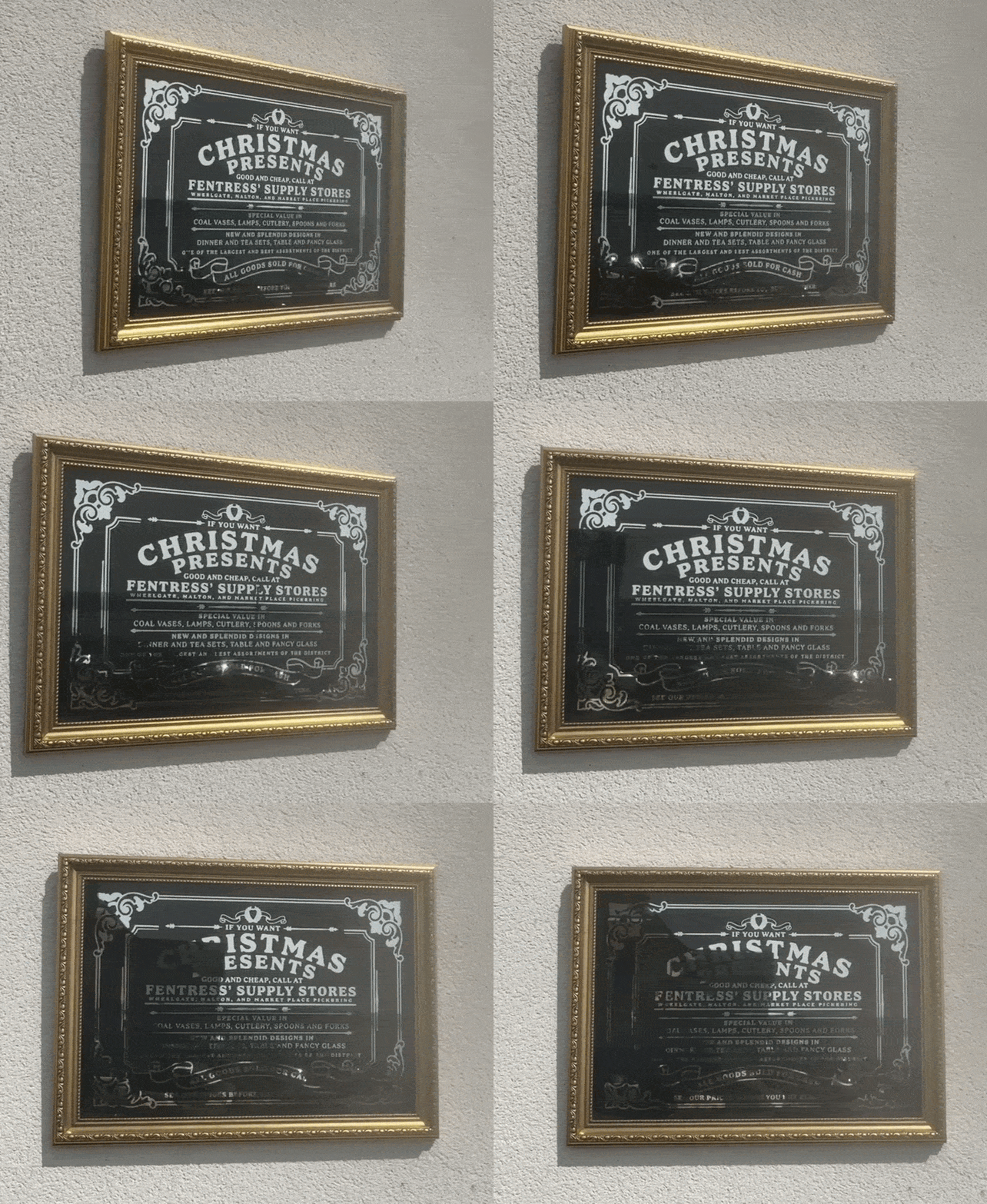 Image 2 of 3
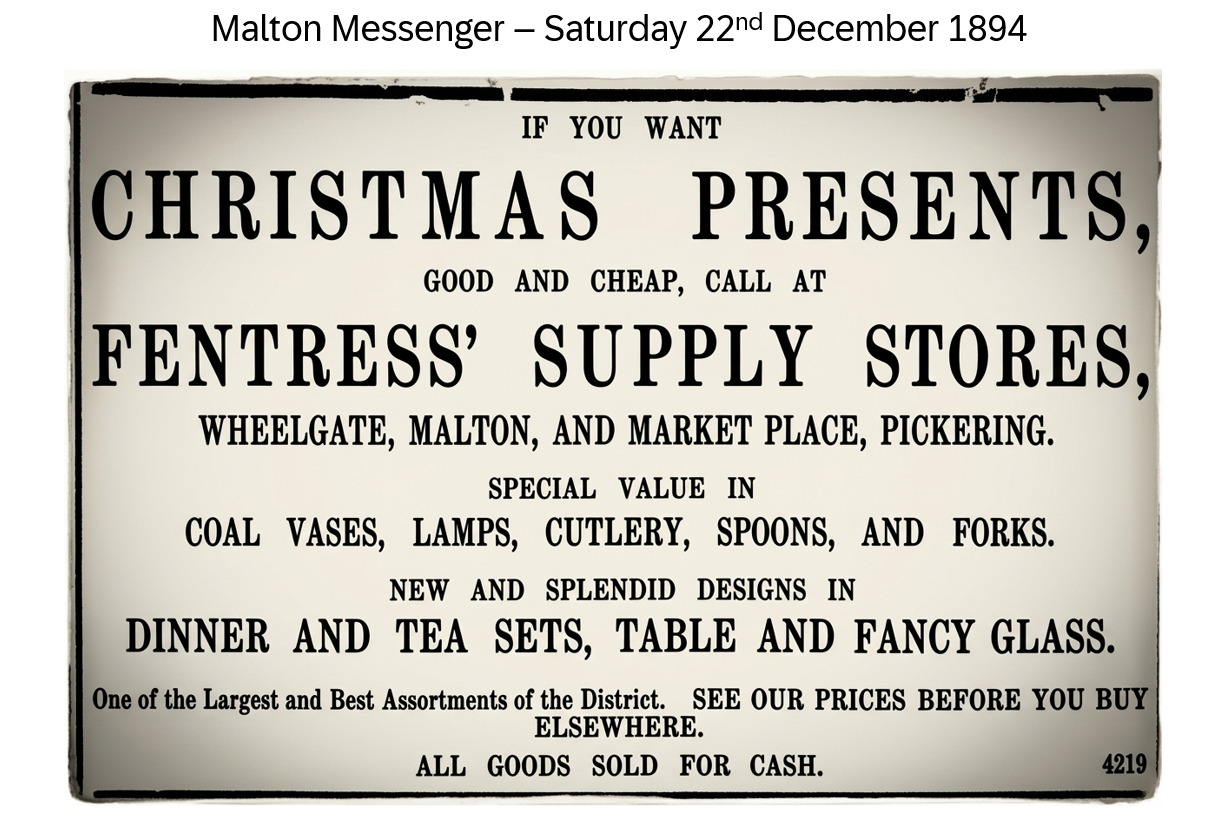 Image 3 of 3
The advertisement belongs to George Fentress, a prominent ironmonger who operated Fentress' Supply Stores in North Yorkshire. He ran a highly practical retail business catering to the everyday domestic needs of local families, maintaining a presence on Wheelgate in Malton and expanding to a second location in the Market Place at Pickering. Far from just a simple shopkeeper, Fentress was an forward-thinking entrepreneur; historical records from the region note that he later integrated cutting-edge technology into his business, installing early telephones and electric bells for public demonstration in his shops.
The environment of December 1894 reflects the heights of the Late-Victorian era, a period when the commercialization of Christmas was rapidly exploding across Great Britain. Local high streets like Malton's Wheelgate were transforming into hubs of festive consumerism. This boom was fueled by a growing middle class with disposable income, an expanding railway network that brought manufactured goods to rural market towns, and the mass production of household items.
The specific items Fentress advertises offer a fascinating snapshot of Victorian daily life and technology:
Coal Vases: Heavy, highly decorative metal scuttles meant to sit beside the hearth. They kept coal neatly disguised but easily accessible, serving as crucial functional centerpieces in homes completely reliant on open coal fires for winter warmth.
Lamps: Oil or paraffin lamps, which were essential for winter illumination. While gas lighting was spreading in urban centers, most rural Yorkshire homes still relied heavily on portable oil lamps for evening light.
Dinner & Tea Sets: Intricate porcelain and glassware that represented a family’s social standing. The Victorian obsession with etiquette and formal hosting meant that elegant table styling was highly coveted, making "splendid designs" an ideal, high-value holiday gift.
The note "All Goods Sold For Cash" highlights the financial realities of the era. By refusing store credit and demanding immediate payment, Fentress could bypass the risk of bad debts, keep his overhead low, and pass those savings down to the consumer with his promise of "good and cheap" holiday shopping.
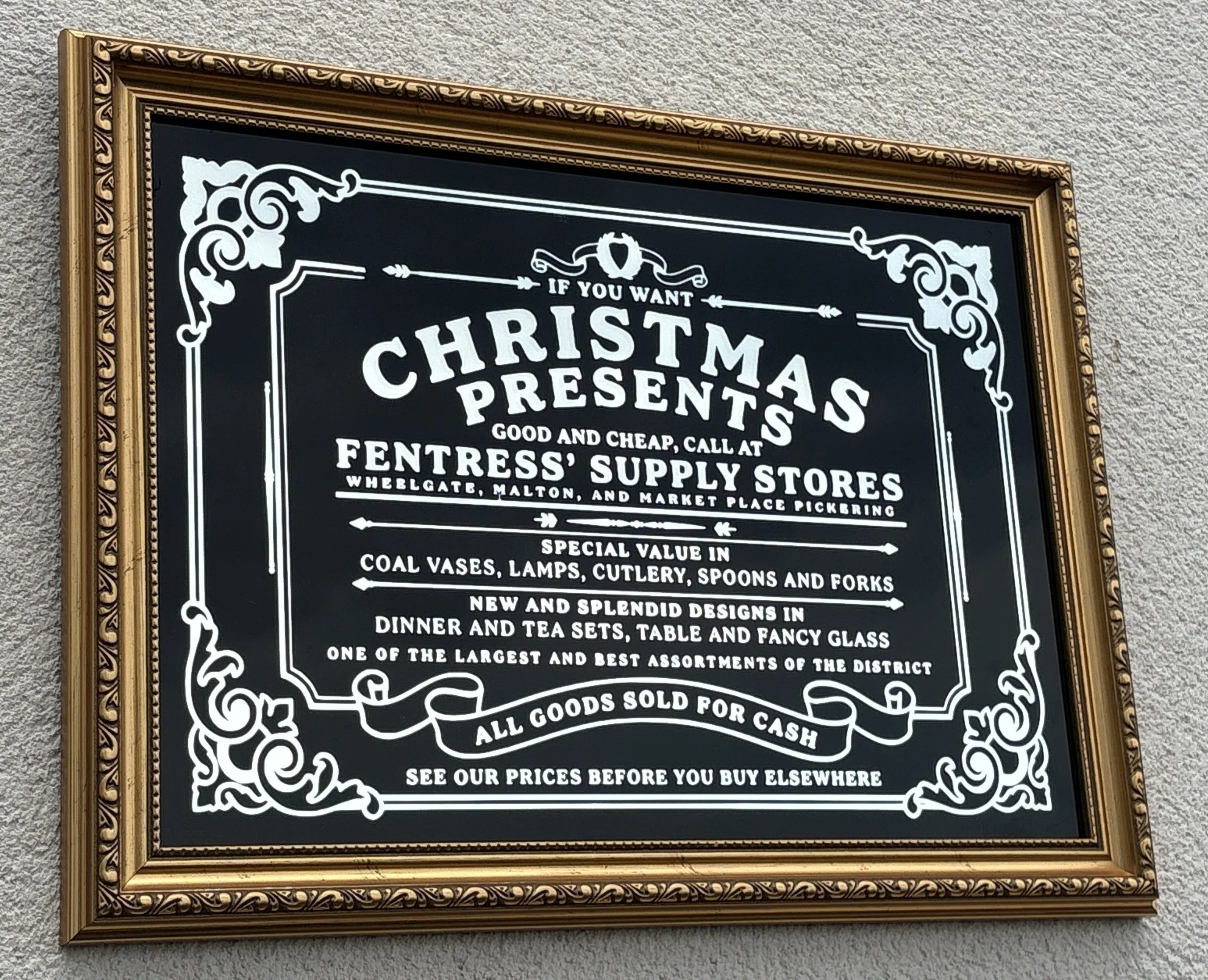
Here we’ve taken the wording from an advertisement in the Malton Messenger of 1894 and created a reverse glass mirrored sign designed with fonts and decoration appropriate to the period.
The advertisement belongs to George Fentress, a prominent ironmonger who operated Fentress' Supply Stores in North Yorkshire. He ran a highly practical retail business catering to the everyday domestic needs of local families, maintaining a presence on Wheelgate in Malton and expanding to a second location in the Market Place at Pickering. Far from just a simple shopkeeper, Fentress was an forward-thinking entrepreneur; historical records from the region note that he later integrated cutting-edge technology into his business, installing early telephones and electric bells for public demonstration in his shops.
The environment of December 1894 reflects the heights of the Late-Victorian era, a period when the commercialization of Christmas was rapidly exploding across Great Britain. Local high streets like Malton's Wheelgate were transforming into hubs of festive consumerism. This boom was fueled by a growing middle class with disposable income, an expanding railway network that brought manufactured goods to rural market towns, and the mass production of household items.
The specific items Fentress advertises offer a fascinating snapshot of Victorian daily life and technology:
Coal Vases: Heavy, highly decorative metal scuttles meant to sit beside the hearth. They kept coal neatly disguised but easily accessible, serving as crucial functional centerpieces in homes completely reliant on open coal fires for winter warmth.
Lamps: Oil or paraffin lamps, which were essential for winter illumination. While gas lighting was spreading in urban centers, most rural Yorkshire homes still relied heavily on portable oil lamps for evening light.
Dinner & Tea Sets: Intricate porcelain and glassware that represented a family’s social standing. The Victorian obsession with etiquette and formal hosting meant that elegant table styling was highly coveted, making "splendid designs" an ideal, high-value holiday gift.
The note "All Goods Sold For Cash" highlights the financial realities of the era. By refusing store credit and demanding immediate payment, Fentress could bypass the risk of bad debts, keep his overhead low, and pass those savings down to the consumer with his promise of "good and cheap" holiday shopping.
Here we’ve taken the wording from an advertisement in the Malton Messenger of 1894 and created a reverse glass mirrored sign designed with fonts and decoration appropriate to the period.