
 Image 1 of 3
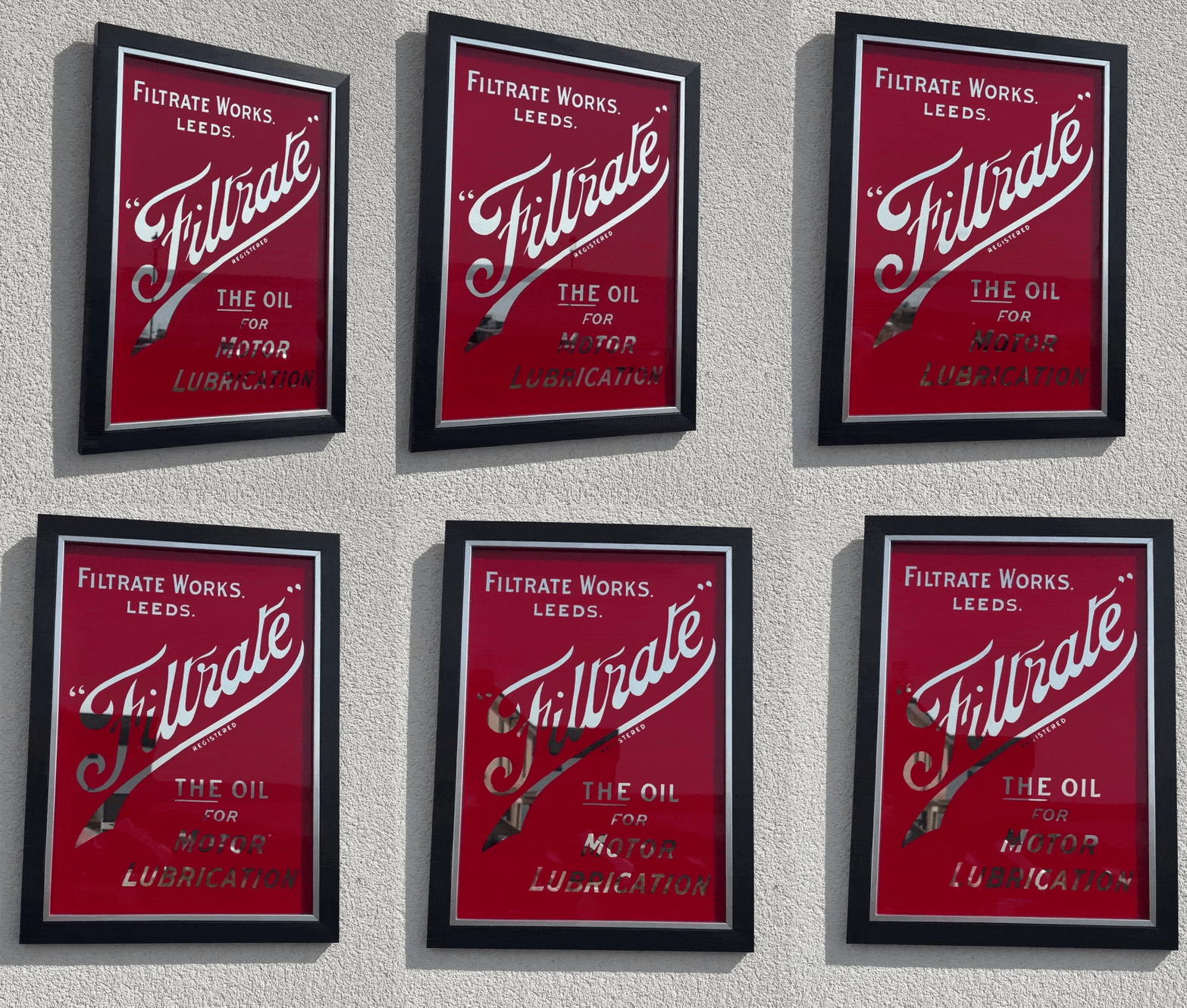 Image 2 of 3
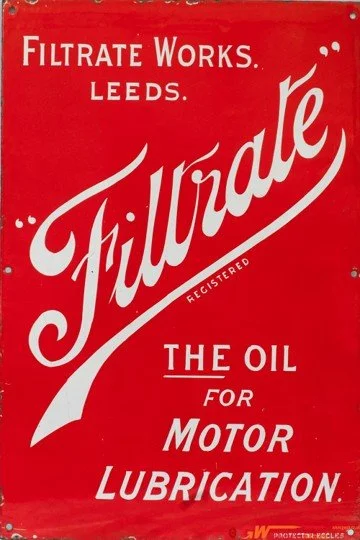 Image 3 of 3
The sign celebrates the industrial legacy of Edward Joy and Sons, which was recognized as Britain's oldest independent lubricating oil manufacturer. The company's origin traces back to 1789, when David Joy, a researcher at the Leeds Infirmary, recognized the commercial potential of crushing seeds like rapeseed and linseed to produce oil. By 1807, his sons William and Edward officially established the business, initially setting up operations at Thwaite Mill in Hunslet alongside the River Aire.
During the 19th-century railway boom, the company became a vital supplier of lubricants for pioneering steam locomotives. Their oil was famously chosen to lubricate George Stephenson’s award-winning engine, "The Rocket," during the historic Liverpool and Manchester Railway trials in 1829.
As the 20th century arrived, the company adapted to the automotive revolution by launching its flagship brand, "Filtrate", operating out of the dedicated Filtrate Works in Leeds. The motor oil gained massive prominence; by 1910, it was officially approved by the Ford Motor Company. It was even selected to protect the machinery on Captain Scott’s Antarctic Expedition. The brand remained a staple of British motoring history for nearly two centuries before the company was eventually acquired in the 1980s.
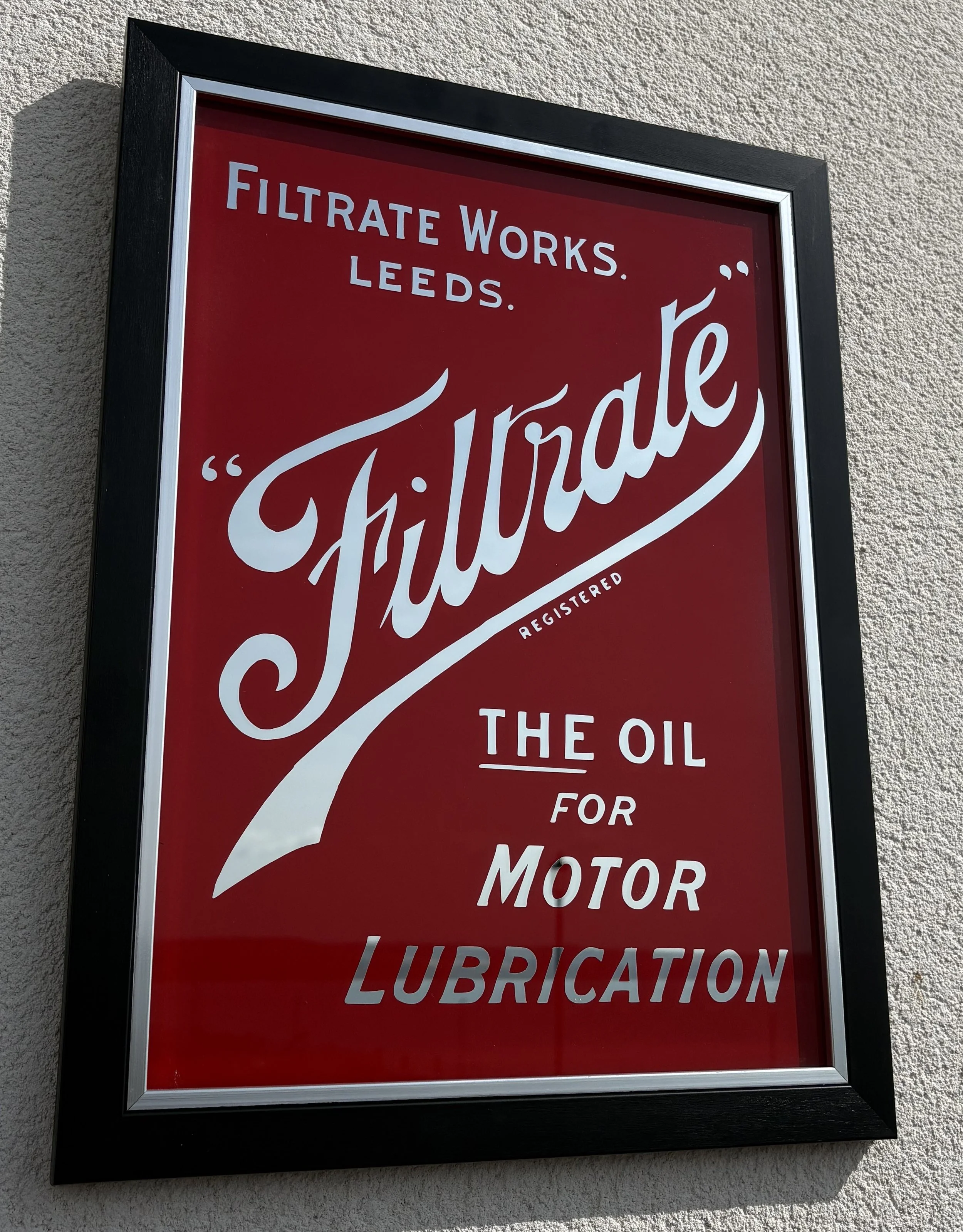
Here we’ve taken an image of a worn enamel sign, digitally corrected it and reproduced it as a decorative reverse glass mirrored sign.
The sign celebrates the industrial legacy of Edward Joy and Sons, which was recognized as Britain's oldest independent lubricating oil manufacturer. The company's origin traces back to 1789, when David Joy, a researcher at the Leeds Infirmary, recognized the commercial potential of crushing seeds like rapeseed and linseed to produce oil. By 1807, his sons William and Edward officially established the business, initially setting up operations at Thwaite Mill in Hunslet alongside the River Aire.
During the 19th-century railway boom, the company became a vital supplier of lubricants for pioneering steam locomotives. Their oil was famously chosen to lubricate George Stephenson’s award-winning engine, "The Rocket," during the historic Liverpool and Manchester Railway trials in 1829.
As the 20th century arrived, the company adapted to the automotive revolution by launching its flagship brand, "Filtrate", operating out of the dedicated Filtrate Works in Leeds. The motor oil gained massive prominence; by 1910, it was officially approved by the Ford Motor Company. It was even selected to protect the machinery on Captain Scott’s Antarctic Expedition. The brand remained a staple of British motoring history for nearly two centuries before the company was eventually acquired in the 1980s.
Here we’ve taken an image of a worn enamel sign, digitally corrected it and reproduced it as a decorative reverse glass mirrored sign.