
 Image 1 of 2
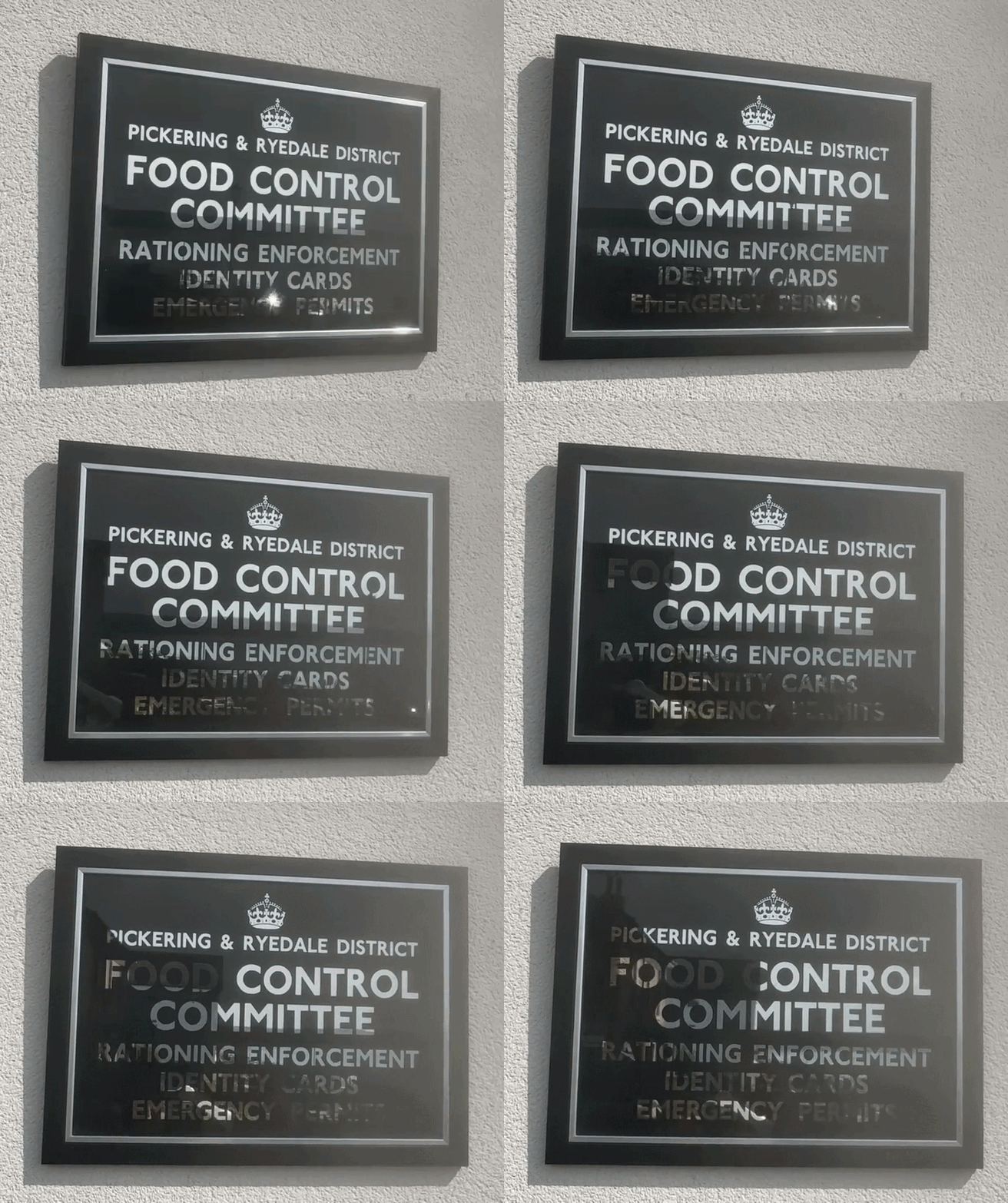 Image 2 of 2
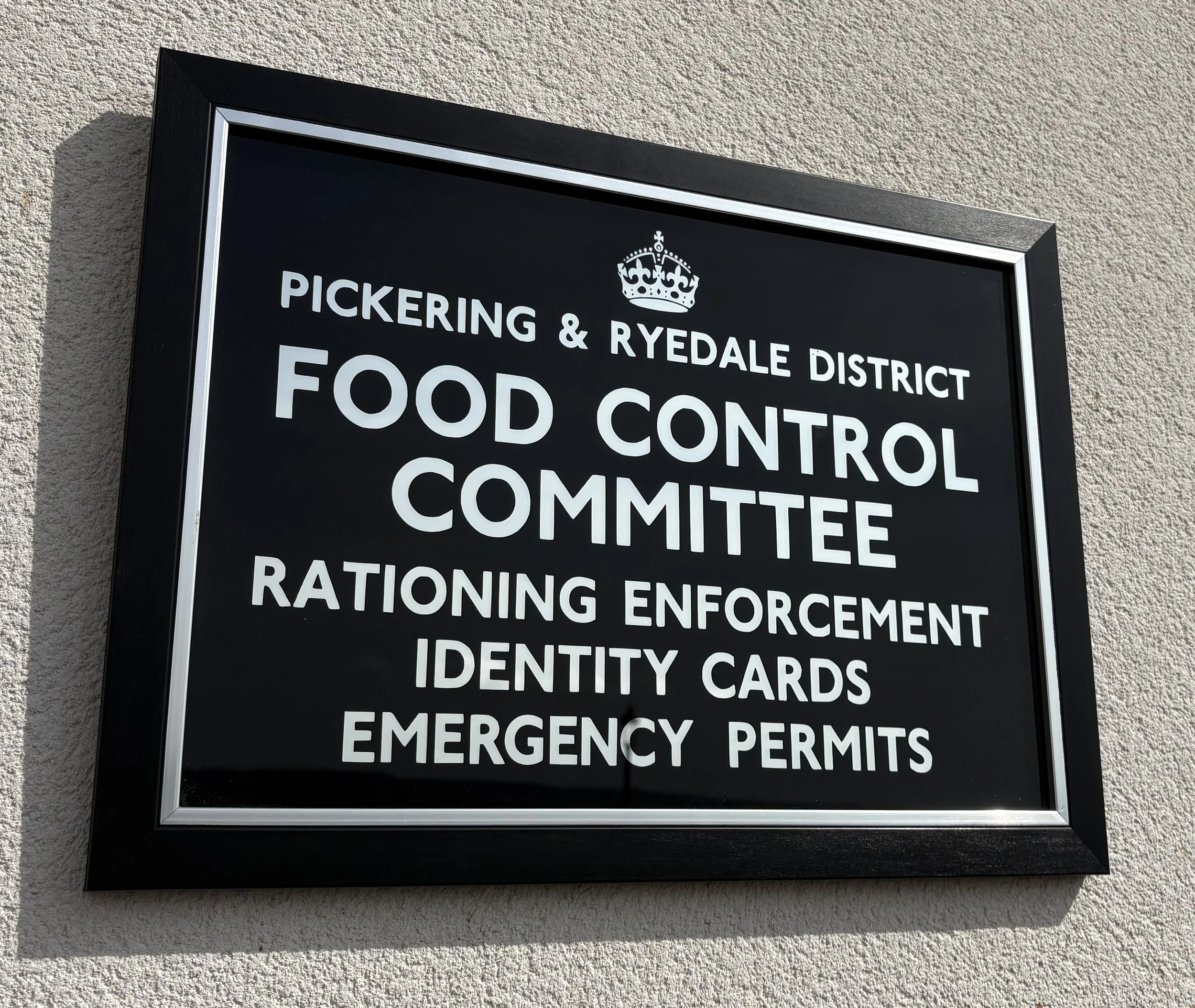
During the Second World War, the Ministry of Food established over 1,500 highly localized Food Control Committees. The joint committee for Pickering and Ryedale in North Yorkshire was vital to rural survival. It managed the strict distribution of resources across a sprawling agricultural community.
Signs like this were essential civic anchors. They directed citizens through a confusing web of wartime bureaucracy. Rationing Enforcement was a serious legal matter. This department investigated black market trading, illegal livestock slaughter, and the hoarding of precious ingredients like butter and sugar. Identity Cards were mandatory under the 1939 National Registration Act. Local offices stamped, updated, and replaced these crucial documents, which linked every citizen directly to their personal ration book.
Meanwhile, Emergency Permits provided temporary coupons for displaced people. These included urban evacuees arriving in Ryedale, traveling agricultural workers, and families bombed out of their homes.
Here we’ve recreated a typical wartime sign, but added a stylish twist of producing it as a reverse glass sign with mirrored writing on a black background
During the Second World War, the Ministry of Food established over 1,500 highly localized Food Control Committees. The joint committee for Pickering and Ryedale in North Yorkshire was vital to rural survival. It managed the strict distribution of resources across a sprawling agricultural community.
Signs like this were essential civic anchors. They directed citizens through a confusing web of wartime bureaucracy. Rationing Enforcement was a serious legal matter. This department investigated black market trading, illegal livestock slaughter, and the hoarding of precious ingredients like butter and sugar. Identity Cards were mandatory under the 1939 National Registration Act. Local offices stamped, updated, and replaced these crucial documents, which linked every citizen directly to their personal ration book.
Meanwhile, Emergency Permits provided temporary coupons for displaced people. These included urban evacuees arriving in Ryedale, traveling agricultural workers, and families bombed out of their homes.
Here we’ve recreated a typical wartime sign, but added a stylish twist of producing it as a reverse glass sign with mirrored writing on a black background