
 Image 1 of 3
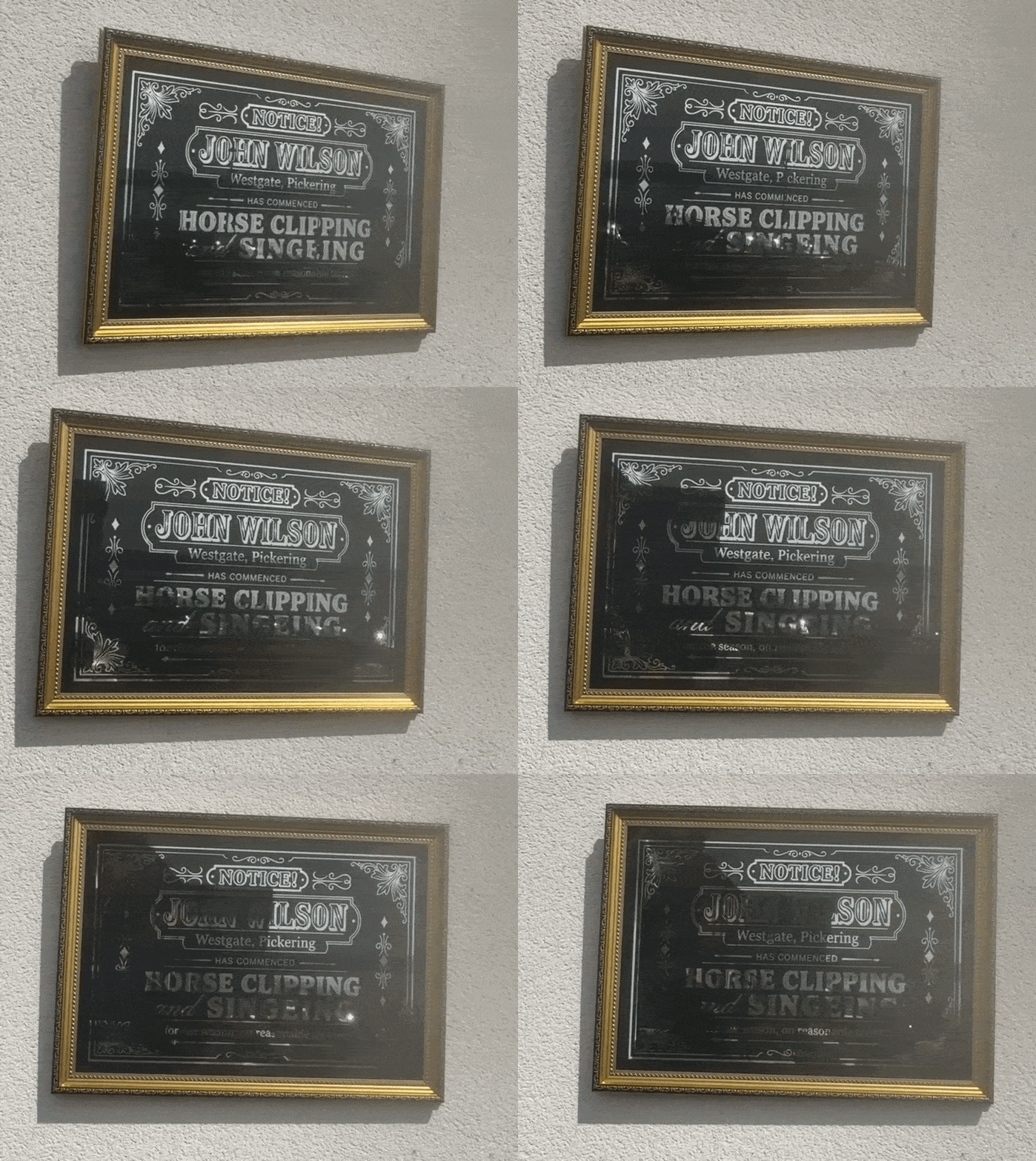 Image 2 of 3
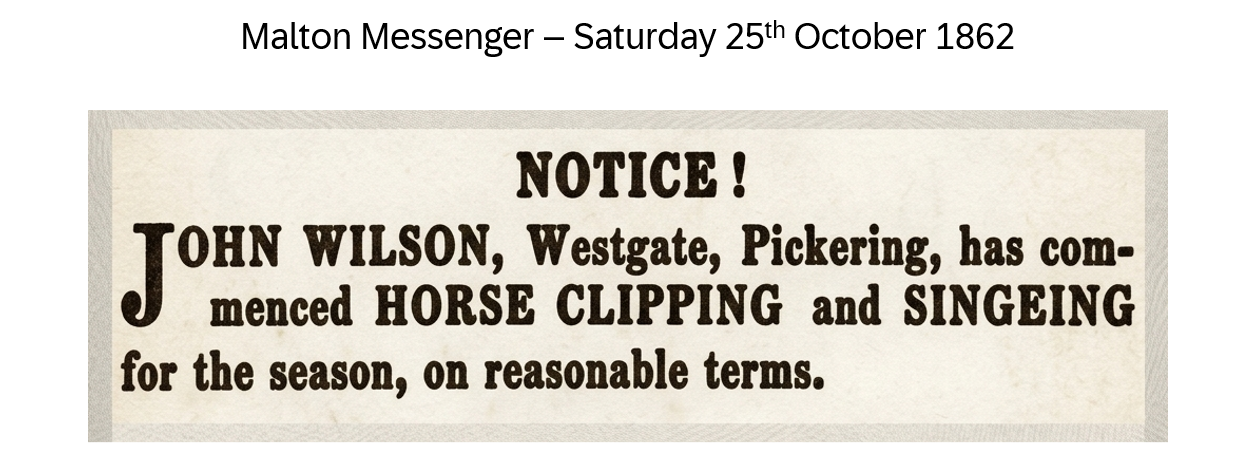 Image 3 of 3
The text originates from a public notice published in the Malton Messenger on Saturday 25th October 1862. It captures a unique and highly specialized facet of mid-Victorian rural economy, local trade, and animal husbandry centered around John Wilson, an equestrian groom operating from Westgate in Pickering. During the 1860s, horses were the absolute lifeblood of agriculture, transport, and local commerce in North Yorkshire. A specialist tradesman like Wilson played an essential role in maintaining the physical health and efficiency of the region's working and riding horses.
The advertisement notes that Wilson has commenced "horse clipping and singeing for the season." In the Victorian era, these seasonal grooming practices were vital as winter approached:
Horse Clipping: Removing a horse's thick winter coat was necessary for animals performing heavy labor or fast carriage work. Without clipping, a working horse would sweat excessively in its winter fur, leaving it damp in the freezing air and highly susceptible to lethal respiratory illnesses.
Singeing: This delicate process involved using a specialized brass or copper hand-held singeing lamp fueled by paraffin or gas. A wide, exposed wick was lit and carefully passed along the horse's coat to instantly burn off long, straggly guard hairs and smooth the edges of a fresh clip. This required immense skill to ensure the horse's skin was never burned, leaving a clean, uniform finish that repelled mud and winter dampness.
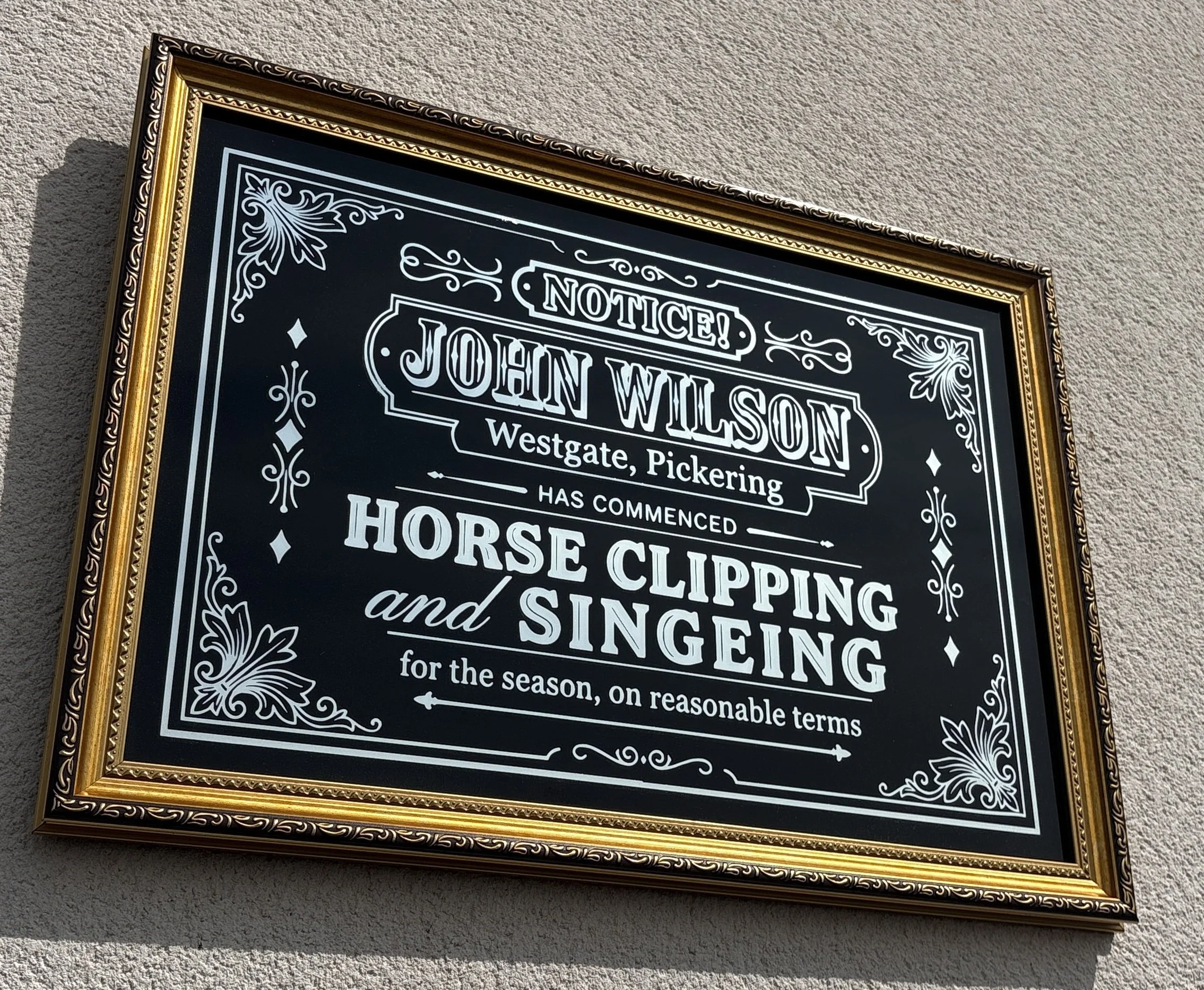
Here we’ve taken the wording from an advertisement in the Malton Messenger of 1862 and created a reverse glass mirrored sign designed with fonts and decoration appropriate to the period.
The text originates from a public notice published in the Malton Messenger on Saturday 25th October 1862. It captures a unique and highly specialized facet of mid-Victorian rural economy, local trade, and animal husbandry centered around John Wilson, an equestrian groom operating from Westgate in Pickering. During the 1860s, horses were the absolute lifeblood of agriculture, transport, and local commerce in North Yorkshire. A specialist tradesman like Wilson played an essential role in maintaining the physical health and efficiency of the region's working and riding horses.
The advertisement notes that Wilson has commenced "horse clipping and singeing for the season." In the Victorian era, these seasonal grooming practices were vital as winter approached:
Horse Clipping: Removing a horse's thick winter coat was necessary for animals performing heavy labor or fast carriage work. Without clipping, a working horse would sweat excessively in its winter fur, leaving it damp in the freezing air and highly susceptible to lethal respiratory illnesses.
Singeing: This delicate process involved using a specialized brass or copper hand-held singeing lamp fueled by paraffin or gas. A wide, exposed wick was lit and carefully passed along the horse's coat to instantly burn off long, straggly guard hairs and smooth the edges of a fresh clip. This required immense skill to ensure the horse's skin was never burned, leaving a clean, uniform finish that repelled mud and winter dampness.
Here we’ve taken the wording from an advertisement in the Malton Messenger of 1862 and created a reverse glass mirrored sign designed with fonts and decoration appropriate to the period.